
Oratio Deucalionis
Volume I

Now the mortal race remains in us two
I’ve finished a Latin reader series for the Metamorphoses which adapts the Metamorphoses into simple prose for beginner readers. You can find it by clicking the button below! If you like this sort of thing, you can check out my series of readers for Plutarch’s Lives, Aesop’s Fables, and the Aeneid. And if you like this sort of thing, please buy a book, leave a positive review and like and share this post.
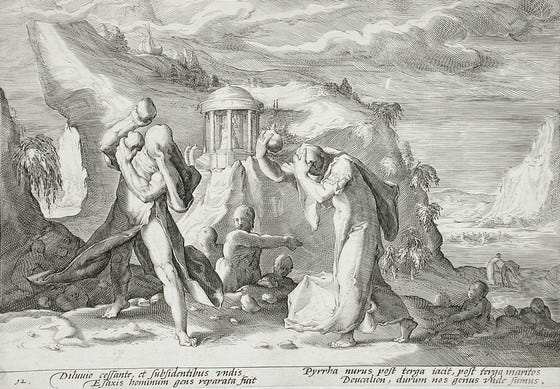
Iūppiter orbem redderat. Postquam orbem inānem et silentia alta in terrās dēsōlātās vīdit, Deucaliōn cum lacrimīs Pyrrham dīcit, “Ō soror, ō coniunx, ō fēmina sōla superstes quam mihi genus commūne et orīgō patruēlis deinde torus iūnxit et nunc ipsa perīcula terrārum iungunt. Quāscumque occāsus et ortūs vident, nōs duo sumus turba; pontus cētera possēdit. Quoque fīdūcia vītae nostrae nōn est certa satis; nūbila etiamnum mentem terrent. Sī fāta mē ēripuerint, quid putābis? Quōmodo tū sōla timōrem ferre poteris? Namque ego (crēde mihi) tē sequerer, ō coniunx, sī pontus tē quoque habēret, et pontus mē quoque habēret.1 Frūstrā volō populōs cum artibus paternīs reparāre atque animās in terrā infundere! Nunc genus mortāle in nōbīs duōbus restat; exempla hominum manēmus.” Et flēbant.
Vocabulary
Ad (prep. + acc.)—to, toward
Altus, a, um—high, deep, profound
Anima, ae, f.—soul, spirit, breath
Ars, artis, f. : skill, art, craft.
Atque (conj.)—and, and also
Certus, a, um—certain, sure, fixed
Cēterī, ae, a—the rest, the others
Commūnis, e—common, shared
Coniūnx, coniūgis, m./f. : spouse, husband, wife.
Crēdō, ere, crēdidī, crēditus : to believe, trust (+ dat.).
Cum (prep. + abl.)—with
Deinde (adv.)—then, next
Dēsōlātus, a, um—forsaken, abandoned
Deucaliōn, Deucaliōnis, m. : Deucalion.
Dīcō, ere, dīxī, dictus : to say, speak, tell.
Duo, ae, o—two
Ēripiō, ere, ēripuī, ēreptus : to snatch away, rescue.
Etiamnum (adv.)—even now, still
Exemplum, ī, n.—example, specimen
Fātum, ī, n.—fate, destiny
Fēmina, ae, f.—woman
Ferō, ferre, tulī, lātus—to bear, carry, endure
Fīdūcia, ae, f.—trust, confidence
Fleō, ēre, ēvī, ētus—to weep, cry
Frūstrā (adv.)—in vain
Genus, generis, n. : race, kind, stock.
Habeō, ēre, uī, itus—to have, hold
Homō, hominis, m. : man, human being.
Inānis, e—empty, void
Infundō, ere, infūdī, infūsus : to pour into, infuse.
Iungō, ere, iūnxī, iūnctus : to join, unite.
Iuppiter, Iovis, m. : Jupiter.
Lacrima, ae, f.—tear
Maneō, ēre, mānsī, mānsūrus—to remain, stay
Mēns, mentis, f. : mind, heart.
Mortālis, e—mortal
Namque (conj.)—for indeed
Nūbilum, ī, n.—cloudy sky, (pl.) clouds
Nunc (adv.)—now
Occāsus, ūs, m.—setting (of the sun), the West
Orbis, orbis, m. : world, circle.
Orīgō, orīginis, f. : origin, source, birth.
Ortus, ūs, m.—rising (of the sun), the East
Paternus, a, um—paternal, of a father
Patruēlis, e—of a father’s brother, cousinly
Perīculum, ī, n.—danger, peril
Pontus, ī, m.—sea
Populus, ī, m.—people, nation
Possideō, ēre, possēdī, possessus—to possess, take over
Possum, posse, potuī—to be able
Postquam (conj.)—after
Putō, āre, āvī, ātus—to think
Pyrrha, ae, f.—Pyrrha
Quīcumque, quaecumque, quodcumque—whoever, whatever
Quis, quid—who, what
Quōmodo (adv.)—how, in what way
Quoque (adv.)—also, even
Reddō, ere, reddidī, redditus : to give back, restore.
Reparō, āre, āvī, ātus—to restore, renew
Restō, āre, restitī—to remain, be left
Satis (adv.)—enough, sufficiently
Sequor, sequī, secūtus sum : to follow.
Sī (conj.)—if
Silentium, iī, n.—silence
Sōlus, a, um—alone, only
Soror, sorōris, f. : sister.
Sum, esse, fuī, futūrus—to be
Superstes, superstitis—surviving
Terra, ae, f.—earth, land
Terreō, ēre, uī, itus—to terrify, frighten
Timōr, timōris, m. : fear, dread.
Torus, ī, m.—couch, marriage bed
Turba, ae, f.—crowd, multitude
Videō, ēre, vīdī, vīsus—to see
Vīta, ae, f.—life
Volō, velle, voluī—to want, wish
Translation
Jupiter had restored the world. After Deucalion saw the empty world and the deep silences in the desolate lands, he said with tears to Pyrrha, “O sister, O wife, O sole surviving woman, whom our common race and cousinly origin then the marriage has joined to me and now these dangers themselves of the lands join to me. Whatever lands the setting sun and rising sun sees, we two are the multitude; the sea possesses everything else. Also confidence of our life is not sure enough; even now the clouds terrify my mind. If the fates snatch me away, what will you think? How will you endure your fear alone? For indeed I (trust me) would follow you, o wife, if the sea also had you, and the sea also would have me. In vain I want to restore the peoples with my paternal arts and to pour their spirits into the earth. Now the mortal race remains in us two; we will remain the examples of mankind.” And they wept.
For indeed (trust me) I would follow you, O wife, if the sea should have you also, and the sea would have me also.