
Genus Novum
Volume I

What art can repair the loss of our race?
I’ve finished a Latin reader series for the Metamorphoses which adapts the Metamorphoses into simple prose for beginner readers. You can find it by clicking the button below! If you like this sort of thing, you can check out my series of readers for Plutarch’s Lives, Aesop’s Fables, and the Aeneid. And if you like this sort of thing, please buy a book, leave a positive review and like and share this post.
Genus Novum
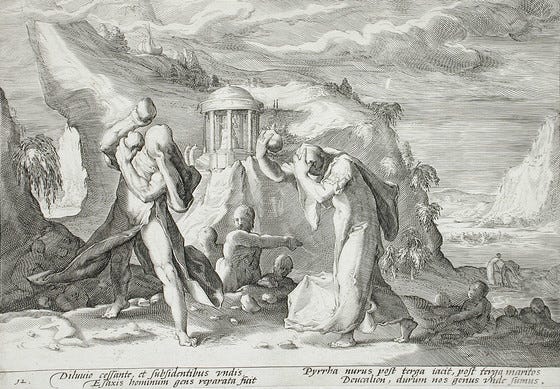
Eīs nūmen caeleste ōrāre et auxilium per sortēs sacrās quaerere placuit. Flectunt vestīgia ad dēlūbra deae sānctae quōrum fāstīgia cum mūscō turpī pallēbant stābantque ārae sine īgnibus. Ut duo gradūs templī tetigērunt, uterque prōnus humī prōcumbit et pavēns ōscula saxō gelidō dedērunt. Dīxērunt, “Sī precēs iūstae nūmina vincunt et sī nūmina remollēscunt, et sī precēs īram deōrum flectunt, dīc, Themī. Quis ars damnum generis nostrī reficere potest? Mītissima dea, opem fer!”
Prex deam mōvit et dea sortem dedit: “Ex templō discēdite et capita vēlāte vestēsque resolvite ossaque parentis māgnae post tergum iactāte!” Diū obstipuērunt, et Pyrrha silentia cum vōce rumpit et iūssīs deae pārēre recūsat. Cum ōre pavidō rogāvit, “Veniam mihi dā. Mihi pavet laedere umbrās māternās et iactāre ossa.” Intereā obscūra verba ex latebrīs caecīs repetēbant et verba inter sē volūtābant. Inde Promēthidēs Epimēthida cum dictīs placidīs mulsit, et ait, “Aut est sollertia fallāx, aut (ōrācula sunt pia nūllumque nefās ōrācula suādent!) māgna parēns est terra. Lapidēs in corpore terrae sunt ossa. Hōs post terga iacere dēbēmus.”
Quamquam augurium coniugis Tītāniam mōvit, spēs tamen est in dubiō: sed quid temptāre nocēbit? Dēscendunt; caput vēlant tunicāsque recingunt, et lapidēs post vestīgia sua mittunt. Quis hoc crēdet nisi est vetustās prō testūdine? Saxa dūritiem pōnere suumque rigōrem mollīre fōrmamque dūcere coepērunt. Mox ubī saxa crēvērunt nātūraque mītior illīs contigit, nūmina superōrum faciem virōrum ex saxibus trāxērunt. Inde sumus genus dūrum experiēnsque labōrum.
Vocabulary
Ad (prep. + acc.)—to, toward
Aiō (defective)—to say, assert
Ārae, ārum, f. pl.—altars
Ars, artis, f. : skill, art, method.
Augurium, iī, n.—augury, interpretation, omen
Auxilium, iī, n.—help, aid
Caecus, a, um—blind, dark, hidden
Caelestis, e—heavenly, celestial
Caput, capitis, n. : head.
Coepiō, ere, coepī, coeptus : to begin.
Coniūnx, coniūgis, m./f. : spouse, wife, husband.
Contingit, ere, contigit : to happen, touch, befall (+ dat.).
Corpus, corporis, n. : body.
Crēdō, ere, crēdidī, crēditus : to believe, trust.
Crēscō, ere, crēvī, crētus : to grow, increase.
Damnum, ī, n.—loss, damage
Dea, ae, f.—goddess
Dēbeō, ēre, uī, itus—to owe, ought
Dēlūbrum, ī, n.—shrine, temple
Dēscendō, ere, dēscendī, dēscēnsus : to climb down, descend.
Deus, ī, m.—god
Dīcō, ere, dīxī, dictus : to say, tell.
Dictum, ī, n.—word, saying, command
Discēdō, ere, dīscessī, dīscessus : to depart, go away.
Diū (adv.)—for a long time
Dō, dare, dedī, datus—to give
Dubium, iī, n.—doubt, uncertainty
Dūcō, ere, dūxī, ductus : to lead, draw, shape.
Duo, ae, o—two
Dūritiēs, iēī, f.—hardness
Dūrus, a, um—hard, harsh, enduring
Epimēthis, Epimēthidos, f.—daughter of Epimetheus (Pyrrha)
Ex (prep. + abl.)—out of, from
Experiēns, experientis—active, testing, enduring (+ gen.)
Faciēs, iēī, f.—face, appearance
Fallāx, fallācis—deceitful, treacherous
Fāstīgium, iī, n.—top, gable, roof
Ferō, ferre, tulī, lātus—to bear, carry, bring
Flectō, ere, flexī, flexus : to bend, turn, move.
Forma, ae, f.—shape, beauty
Gelidus, a, um—icy, cold
Genus, generis, n. : race, kind, stock.
Gradus, ūs, m.—step, pace
Humī (locative)—on the ground
Iaciō, ere, iēcī, iactus : to throw, hurl.
Ignis, is, m. : fire.
Inde (adv.)—thence, from that place
Inter (prep. + acc.)—between, among
Intereā (adv.)—meanwhile
Īra, ae, f.—anger, wrath
Iūssum, ī, n.—command, order
Iūstus, a, um—just, right
Labor, labōris, m. : labor, hardship, task.
Laedō, ere, laesī, laesus : to harm, strike, offend.
Lapis, lapidis, m. : stone.
Latebra, ae, f.—hiding place, mystery, recess
Māgnus, a, um—great, large
Māternus, a, um—maternal, of a mother
Mītis, e—mild, soft, gentle
Mittō, ere, mīsī, missus : to send, throw.
Molliō, īre, īvī, ītus—to soften
Moveō, ēre, mōvī, mōtus—to move, stir
Mox (adv.)—soon
Mulceō, ēre, mulsī, mulsus—to soothe, soften
Mūscus, ī, m.—moss
Nātūra, ae, f.—nature
Nefās, n. (indecl.)—wickedness, crime against gods
Nisi (conj.)—unless, if not
Noceō, ēre, uī, itus—to harm (+ dat.)
Nūllus, a, um—none, no
Nūmen, nūminis, n. : divine power, divinity.
Obscūrus, a, um—dark, obscure
Obstipēscō, ere, obstipuī : to be dazed, stand agape.
Ops, opis, f. : power, help, aid.
Ōrāculum, ī, n.—oracle
Ōrō, āre, āvī, ātus—to pray, entreat
Ōs, ōris, n. : mouth, face.
Os, ossis, n. : bone.
Ōsculum, ī, n.—kiss
Pallēscō, ere, palluī : to turn pale.
Parēns, parentis, m./f. : parent.
Pāreō, ēre, uī, itus—to obey (+ dat.)
Pavēns, paventis—trembling, fearful
Paveō, ēre, pāvī—to tremble with fear, dread
Pavidus, a, um—fearful, trembling
Per (prep. + acc.)—through
Pius, a, um—pious, holy, dutiful
Placeō, ēre, uī, itus—to please (+ dat.)
Placidus, a, um—calm, peaceful
Pōnō, ere, posuī, positus : to place, lay aside.
Possum, posse, potuī—to be able
Post (prep. + acc.)—after, behind
Prex, precis, f. : prayer, entreaty.
Prō (prep. + abl.)—for, on behalf of; (here) in place of
Prōcumbit, prōcumbere, prōcubuī : to fall forward, lie prostrate.
Promēthidēs, ae, m.—son of Prometheus (Deucalion)
Prōnus, a, um—leaning forward, prostrate
Pyrrha, ae, f.—Pyrrha
Quaerō, ere, quaesīvī, quaesītus : to seek, look for.
Quamquam (conj.)—although
Quis, quid—who, what
Recingō, ere, rēcīnxī, rēcīnctus : to ungird, loosen.
Recūsō, āre, āvī, ātus—to refuse
Reficiō, ere, refēcī, refectus : to restore, repair.
Remollēscō, ere—to soften again, be moved.
Repetō, ere, repetīvī, repetītus : to seek again, repeat.
Resolvō, ere, resolvī, resolūtus : to loosen, untie.
Rigor, rigōris, m. : stiffness, rigidity.
Rogō, āre, āvī, ātus—to ask
Rumpō, ere, rūpī, ruptus : to break, burst.
Sacer, sacra, sacrum—sacred, holy
Sānctus, a, um—holy, sacred, venerable
Saxum, ī, n.—rock, stone
Sī (conj.)—if
Silentium, iī, n.—silence
Sine (prep. + abl.)—without
Sollertia, ae, f.—skill, cleverness
Sors, sortis, f. : lot, oracle, destiny.
Spēs, speī, f.—hope
Suādeō, ēre, suāsī, suāsus—to advise, urge
Sum, esse, fuī, futūrus—to be
Superus, a, um—upper; (m. pl.) the gods
Tamen (adv.)—however
Tangō, ere, tetigī, tāctus : to touch, reach.
Templum, ī, n.—temple
Temptō, āre, āvī, ātus—to try, test
Tergum, ī, n.—back
Terra, ae, f.—earth, land
Testūdō, testūdinis, f. : tortoise; (here) shell, testimony.
Themī—(vocative of Themis)
Tītānia, ae, f.—Titaness (Pyrrha)
Trahō, ere, trāxī, tractus : to pull, draw, acquire.
Tunica, ae, f.—tunic, garment
Turpis, e—ugly, foul, unsightly
Ubī (adv.)—where, when
Umbra, ae, f.—shadow, ghost
Uterque, utraque, utrumque—each (of two)
Vēlō, āre, āvī, ātus—to veil, cover
Verbum, ī, n.—word
Vestīgium, iī, n.—footstep, track
Vestis, vestis, f. : clothing, garment.
Vetustās, ātis, f. : antiquity, old age.
Vincō, ere, vīcī, victus : to conquer, overcome.
Vir, virī, m.—man
Volūtō, āre, āvī, ātus—to roll, ponder, turn over
Vōx, vōcis, f. : voice, sound.
Translation
It pleased them to pray to the heavenly spirit and to seek help through sacred oracles. They turn their tracks to the holy goddess’s shrines the roofs of which were pale with foul moss, and the altars stood without fires. As the two touched the steps of the temple, each lay face down on the ground, trembling kissed the cold ground. They said, “If just prayers overcome the gods and if the gods are softened, and if prayers turn the wrath of the gods, speak, Themis. What art can repair the loss of our race? Gentlest goddess, bring help!”
The prayer moved the goddess, and the goddess gave an oracle: “Leave the temple, and veil your heads, and loosen your clothes, and cast the bones of your great parent behind your back!” For a long time they were gazed, and Pyrrha broke the silence with her voice and refused to obey the commands of the goddess. With her frightened mouth, she asked, “Give mercy to me. It is dreadful to me to harm the shades of our mothers and to throw their bones.” Meanwhile they sought obscure words from blind hiding spots and pondered the words among themselves. Thence Deucalion soothed Pyrrha with calm words and said, “Either it is a deceitful skill, or (oracles are pious, and oracles urge no evil deed) our great parent is the earth. The stones in the earth’s body are her bones. We should throw these behind our backs.”
Although the interpretation of her husband, moved Pyrrha, nevertheless, her hope is in doubt: but what does it harm to try? They descend, cover their head, loosen their tunics, and throw the stones behind their tracks. Who will believe this unless there is antiquity as a witness? The stones began lay aside their hardness and to soften their rigor and draw their form. Soon when the rocks grew and a softer nature touched them, the spirits of the gods drew the face of men from the rocks. Thence we are a hard race and enduring of suffering.